
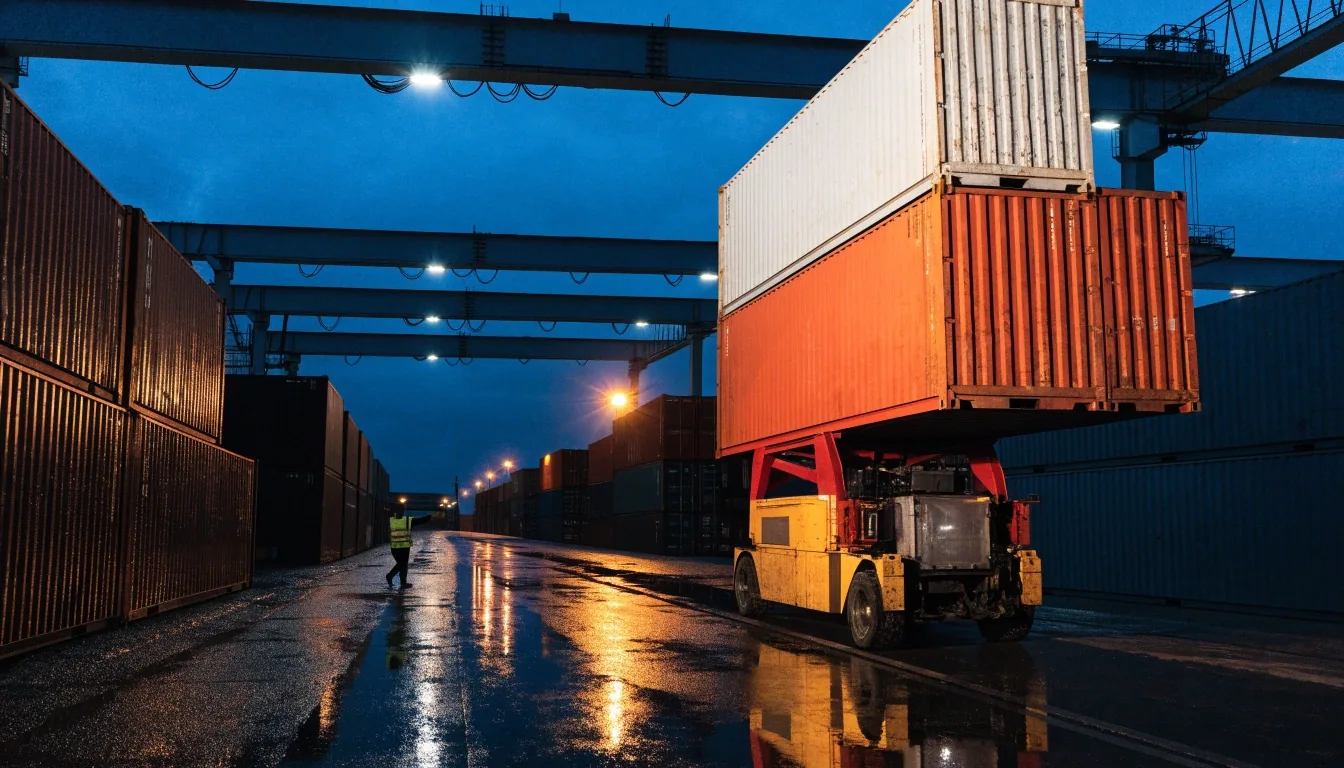
Answers to common shipping questions
These are the questions we get asked most often by businesses shipping in and out of Belgium. They cover timelines, customs paperwork, tracking, warehousing, and the difference between a parcel carrier and a freight forwarder.
Where your question probably sits
Most queries we receive from Belgian shippers fall into four buckets. If you already know which one you are in, jump straight there — the answer pages carry the detail, this page carries the short version.
-
Jump to which mode should I choose
Choosing a mode
Air, ocean, road or express, and how urgency and volume decide.
-
Jump to documents for an international shipment
Documents & customs
Invoices, HS codes, T1 transit, and what actually slows clearance.
-
Jump to tracking a shipment
Tracking & storage
Following a container, an air waybill, and using a bonded warehouse.
-
Jump to calculating landed cost
Costs & delays
Landed cost build-up, Incoterms, and avoiding queues at the port.
Cannot find your question? Send it through the contact page and we will answer it directly.

Written for shippers, not shoppers
Every answer here is the practical version: what applies to a Belgian export or import, what to prepare before the cargo moves, and where the detail lives if you need it.
Where the numbers come from
Transit windows and duty figures depend on the lane, the goods and the carrier, so we show you how they are assembled rather than quoting figures that only fit one shipment.
The one habit that saves the most time
Documents agreed before the cargo moves
Almost every delay we are called about traces back to one of three things: an invoice and packing list that do not agree, an HS code chosen late, or a transit document raised after departure. Fixing that before booking is cheaper than fixing it at the terminal.
Shipping and customs questions, answered
Grouped by the decision you are actually trying to make. Open the ones that apply to your shipment; the links inside point to the page with the full walkthrough.
Choosing a mode
Which mode should I choose?
It depends on urgency, volume, and budget. Air freight suits urgent, high-value, or time-sensitive cargo. Ocean freight through Antwerp-Bruges is economical for larger volumes but slower. Road freight is often the practical choice for European lanes, and express services cover small, urgent parcels with a door-to-door promise.
A useful rule of thumb: if the goods fit on a pallet and the deadline is measured in days, look at road or express first. If the deadline is measured in weeks and the volume is measured in cubic metres, ocean will usually cost less per unit. Air sits in the middle and earns its place when the cargo value justifies the rate.
See the freight modes comparisonWhat decides it, in order
Deadline first, then value density, then volume. Rate is a result of those three, not the starting point.
Deadline · Value · Volume
Documents & customs
What documents do I need for an international shipment?
A commercial invoice, a packing list, and the correct HS code are the usual minimum. Depending on the goods and the destination, you may also need a certificate of origin, a license, or a transit document such as T1. The transport document, such as a bill of lading or air waybill, is issued as part of the booking.
The invoice and packing list must tell the same story — same quantities, same descriptions, same values. When they disagree, customs has to stop and ask, and that stop is what costs you days rather than hours.
Read the customs and documentation guideHow long does customs clearance take?
It varies. A clean declaration with correct documents can clear quickly, often within a day. Problems with the invoice, the HS code, or the declared value can add days. Goods arriving at a port or airport during a busy period may also queue.
The reliable way to reduce clearance time is to prepare the documents accurately before the shipment moves. Declaring the true value and the correct code is not slower than guessing — it is the difference between a release and a query.
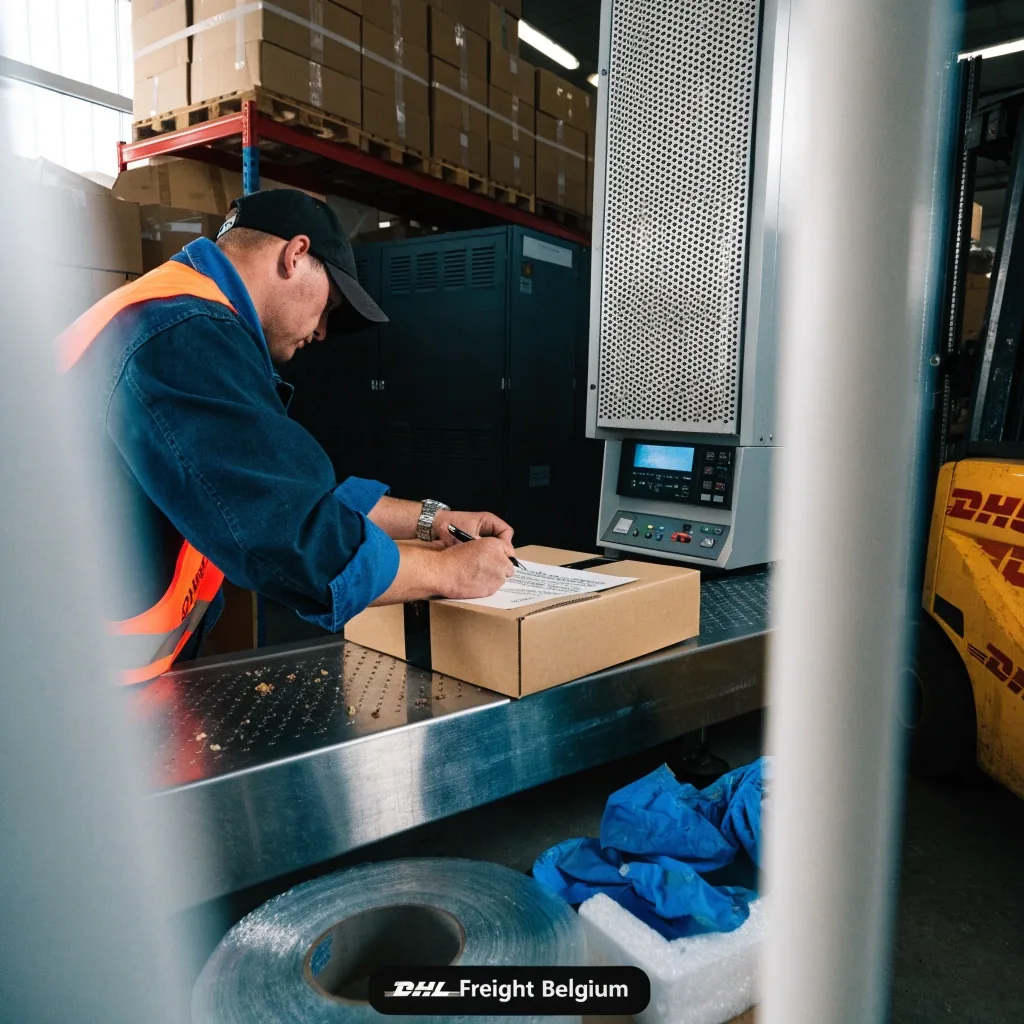
The three documents that matter most
- Commercial invoice with accurate values and Incoterms
- Packing list matching the invoice line by line
- HS code chosen before the booking, not at arrival
Tracking & storage
How do I track a shipment?
Tracking depends on the mode and the carrier. Air and express shipments usually have a tracking number that updates at each scan point. Ocean shipments can be tracked by container number through the shipping line. Road shipments are tracked through the haulier's system.
Ask us for the reference when the shipment is booked, and we can also check the status on your behalf. For a full container we normally hold both the container number and the booking reference, which helps when a terminal reports a delay that the carrier feed does not show.
When should I use bonded warehousing?
Bonded warehousing is useful when you want to store imports before duties and import VAT become payable. It can help with cash flow if you are importing in bulk, and it lets you release stock gradually rather than moving everything at once. It also gives you more control over when the tax point falls.
It does not remove the charges, only shifts the timing. If your stock turns over slowly or you buy in large lots, the shift is usually worth arranging in advance.
See the warehousing and services overview
Which reference to keep
- Air & expressAWB / tracking no.
- Ocean freightContainer no.
- Road freightHaulier ref.
Costs & delays
How do I calculate landed cost?
Start with the supplier's price, add freight and insurance to the point of entry, apply the duty rate for the HS code, add import VAT on the combined figure, then add handling, storage, and last-mile charges.
Incoterms decide whether the buyer or the seller pays each of these, which is why the same goods can land at very different totals under two different terms.
Walk through Incoterms and landed costHow do I reduce delays at Antwerp or Brussels Airport?
Prepare the documents before the cargo arrives, make sure the invoice and packing list agree, and confirm the HS code in advance. Book space early during peak periods, and check whether a transit procedure would help if the goods are moving onward.
If the shipment is time-critical, tell us at the booking stage so the routing can account for it. A terminal queue is easier to plan around when we know the deadline before the container is loaded.
What landed cost is made of
The same shipment produces a different total depending on the term you agreed and how the duty base is declared. This is the order the costs stack in.
- 1Supplier price, ex works or FOB depending on the Incoterm
- 2Freight and insurance to the point of entry
- 3Duty at the rate tied to the HS code
- 4Import VAT on the combined figure
- 5Handling, storage and last-mile delivery
Working with a forwarder
Parcel carrier or freight forwarder?
Both move goods. The difference is what they are built to handle. The clearest way to choose is to look at what is on the pallet and what has to happen before it arrives.
Parcel carrier
Freight forwarder
Moves individual packages on a fixed network with standardised service levels.
Arranges transport across modes and handles customs clearance around a specific shipment.
Simple for a single small parcel with a known address and a known date.
Needed once pallets, containers, or customs entries are involved.
Tracking number updates as the package scans through the network.
Coordinates documentation, warehousing and delivery around one plan.
For a single small parcel, a carrier is usually the simplest option. For anything involving pallets, containers, or customs, a forwarder is generally the better fit.
Still not sure which question applies?
Send the shipment details — origin, destination, goods, deadline — and we will tell you which mode, which documents, and which clearing route fit. That is faster than working through each question one at a time, and it gives you a single answer instead of five partial ones.
Talk to the Lochristi office
- Address
- Raveschoot 22, 9080 Lochristi, Belgium
- Phone
- +32 759716102
- [email protected]
- Opening hours
- Monday to Friday, 09:00 – 18:00
Where the shipments start
Our base is in Lochristi, a short run from the Port of Antwerp-Bruges and within reach of Brussels Airport. That position is why road, ocean and air options are all practical from here.
- Raveschoot 22, 9080 Lochristi, Belgium
- Monday to Friday, 09:00 – 18:00
- +32 759716102