Atlantic Star Logistics Atlantic Star Logistics · Lochristi
Bonded warehouse interior at night with steel racking and a warm lamp pool on the concrete floor

Freight forwarder · Lochristi, East Flanders

About Atlantic Star Logistics in Lochristi

We coordinate air, ocean, and road freight, customs clearance, and warehousing for businesses that trade across Europe and beyond — from a single office at Raveschoot 22, 9080 Lochristi.

Our work sits between the companies that make and sell goods and the carriers, ports, airports, and customs authorities that move and clear them.

That is the whole job in one sentence. Everything below explains what it means in practice, who we work with, and where our limits are.

Where we are

Where we are and why it matters

Lochristi sits in East Flanders, close to Ghent and within reach of the main Belgian gateways. The Port of Antwerp-Bruges is the primary maritime hub for the country, and Brussels Airport handles the air side. The road network connects both to the rest of Europe.

Being based here means a shipment can move between modes without a long inland leg, and it keeps us close to the customs infrastructure that Belgian trade depends on. When a container needs to be shifted from a terminal to a warehouse, or an air consignment has to clear and reach a truck the same day, the distances stay short and the paperwork stays in one time zone.

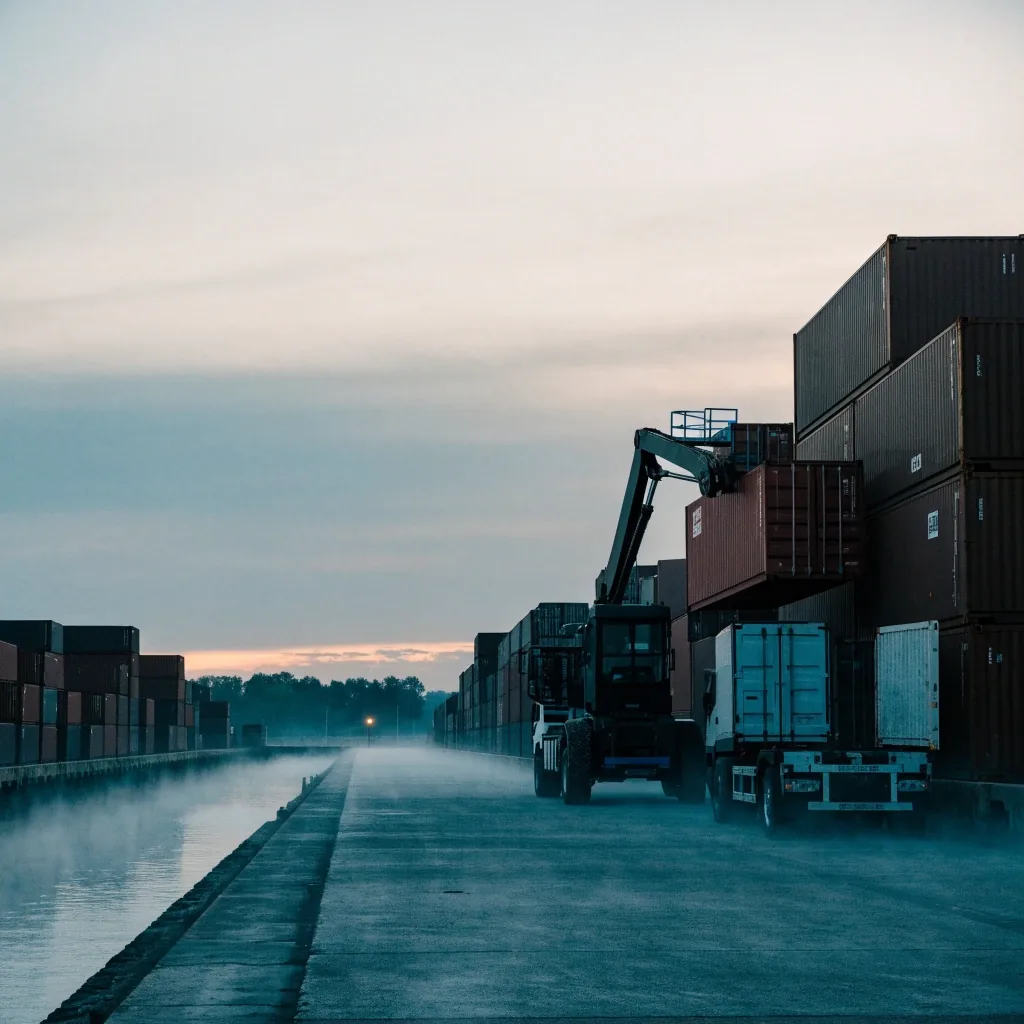
Reach stacker moving a container onto a truck chassis at a Belgian inland terminal in early morning mist
Port of Antwerp-Bruges Brussels Airport East Flanders road network

Day to day

What we do day to day

Most of our work is coordination. It rarely looks dramatic from the outside, and that is the point — the dramatic version is the one where something went wrong.

Booking space and modes

We hold allocations with shipping lines, airlines, and groupage consolidators, then match the booking to the cargo, the deadline, and the destination rather than to whichever mode is easiest to sell.

Documents and customs

Commercial invoices, packing lists, certificates of origin, T1 transit documents, and import declarations are prepared and checked before the cargo moves, not after it arrives at a border.

Storage when goods wait

When a consignment has to pause — a buyer not ready, a duty payment pending, a vessel rolled — we arrange short-term storage and keep the release conditions visible on paper.

Following the shipment

We track the consignment from collection to final address and chase the carrier when a milestone slips. You should not have to phone three parties to find out where your goods are.

Talking to everyone same-day

Shipping lines, airlines, hauliers, and customs authorities are usually asking about the same consignment on the same day. Keeping those conversations joined up is a large part of the work.

Closing the loop

Once delivery is confirmed we keep the file together — proof of delivery, declaration references, and the costs that were actually incurred — so a repeat shipment starts from facts, not from memory.

Our method

How we approach a shipment

We start with the cargo and the deadline, not with a preferred mode. The order below is the order we actually work in, and the cost conversation comes last on purpose.

  1. 1

    Read the cargo and the deadline

    If the goods are urgent, we look at air or express. If the volume is large and the schedule allows, we look at ocean. If the destination is in Europe, road is often the sensible answer. Weight, dimensions, and whether the cargo can be stacked all change the recommendation.

  2. 2

    Check the documentation before the price

    A fast route with a paperwork problem is slower than a slow route with clean paperwork. We look at the commercial invoice, the goods description, the HS code, the Incoterm, and any licensing or certificate the destination requires — and we say so when something is missing.

  3. 3

    Then talk about cost

    Only after the route and the documents hold up do we discuss freight rates, surcharges, duty, and the landed cost at the destination. Quoting before that step produces numbers that change, and we would rather quote once.

  4. 4

    Plan the exceptions early

    We flag the points where a shipment usually stalls — a terminal congestion window, a bank holiday at the destination, a missing certificate — and agree in advance what happens if the plan slips. It is cheaper to decide that now than at 22:00 on a Friday.

Who we work with

Who we work with

Importers and exporters

Some have been shipping for years and want a partner who can absorb the complexity — the awkward declarations, the multi-leg routings, the supplier who sends documents late. They already know what they need and mainly want it handled without surprises.

Others are placing their first import order and need to know what a commercial invoice or an HS code actually is, and why the buyer or seller named on it changes who pays the duty. Both are welcome, and both get the same explanation in plain language.

Full container and groupage Air and express
E-commerce brands and manufacturers

Online sellers shipping across Europe care about two things: a delivery promise the customer can believe, and a returns process that does not turn into a customs puzzle. We plan the outbound lane and the return leg together.

Manufacturers usually arrive with a different problem — production parts that have to be on the line at a fixed hour. There the job is schedule discipline, and the freight mode is chosen around the production calendar rather than the freight rate.

Europe-wide lanes Planned delivery windows

Limits

What we are not

Being clear about this saves time on both sides. We are a freight forwarder and logistics coordinator, not a carrier, a manufacturer, or a retailer. We do not own ships, planes, or a fleet of trucks, and we do not sell goods.

We also do not control port congestion, border queues, or the duty rates that apply to your products — those are set by terminals, authorities, and trade rules. What we can do is plan the shipment properly, keep the paperwork in order, and tell you honestly when a timeline or a route is not realistic, so you can make a decision with real information instead of a hopeful one.

If a request falls outside what we handle, we will say so at the start rather than three weeks into the booking.

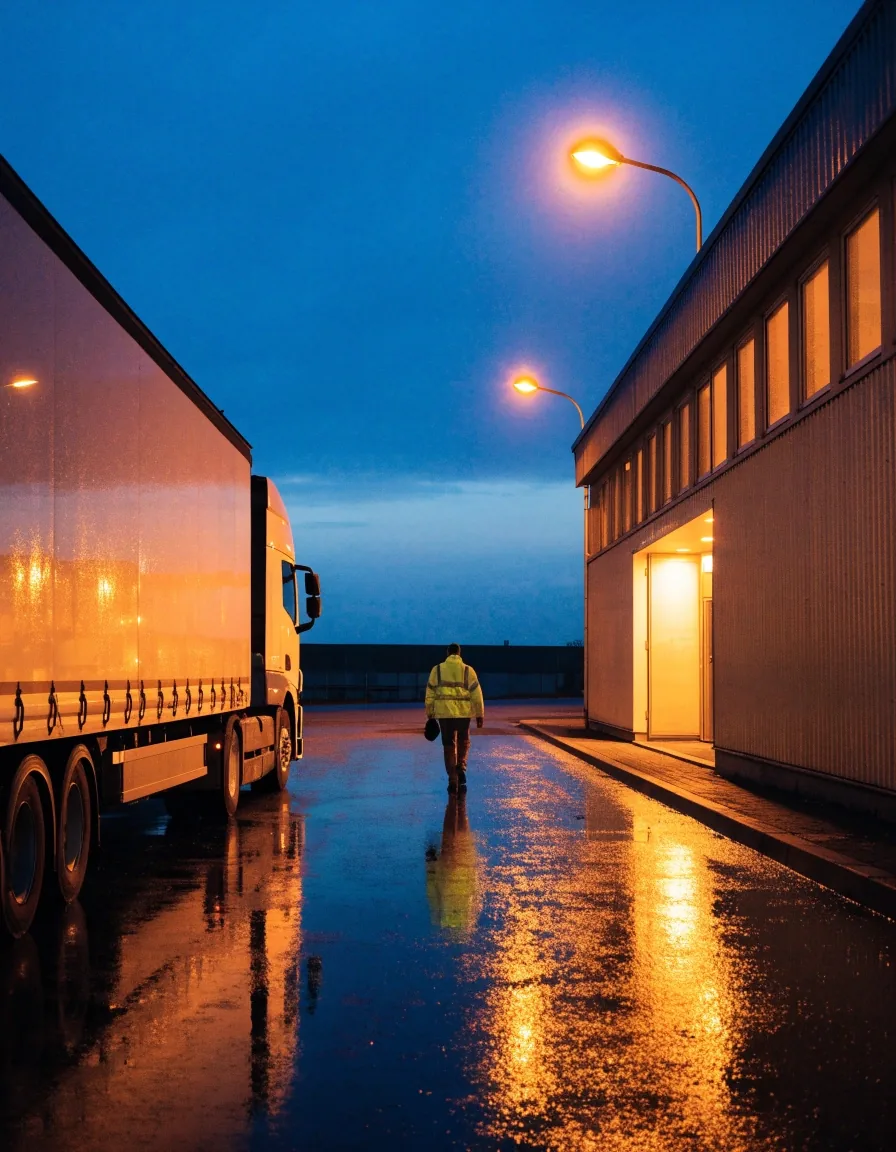
Articulated truck parked at a Belgian motorway service area at dusk with wet asphalt reflecting the sky

Road freight across Belgium and into neighbouring markets is usually the shortest route between two European addresses.

Our team

The people behind the work

A freight forwarder is only as good as the people answering the phone when something goes wrong. Our team handles bookings, customs documentation, and customer queries from the Lochristi office. You deal with people who know your shipment, not a call center reading from a script.

If a container is held at a terminal or a flight is delayed, you hear about it from someone who can tell you what is being done about it — and who can reach the carrier, the haulier, or the broker directly. Roles overlap on purpose, so nobody has to wait for a colleague to come back from lunch before an answer is given.

Bookings and quotes

Space requests, rate comparisons, and the first answer on whether a deadline is achievable.

Customs documentation

Declarations, transit documents, and the checks that keep a consignment from being held at the border.

Transport coordination

Collection, haulage, and the handovers between terminal, warehouse, and final address.

Customer queries

Explaining a charge, a delay, or a term you have not met before, until it makes sense.

Raveschoot 22, 9080 Lochristi +32 759716102 [email protected]

Plain language

How we keep things clear

International shipping has a lot of jargon: Incoterms, HS codes, T1 transit, landed cost, groupage. We try to explain these in plain language rather than hiding behind them.

Our guides on customs documentation, freight modes, and landed cost are written for people who need to understand the process, not for people who already do. If something is unclear after reading, ask, and we will explain it again.

Terms we get asked about most

Incoterms
Short three-letter rules that decide who arranges and pays for each leg of the journey, and where the risk changes hands.
HS code
The number that classifies your product for customs. It drives the duty rate, so a wrong code is an expensive mistake.
T1 transit
A document that lets goods move through countries without paying duty at every border, provided the movement is closed correctly at the end.
Landed cost
What the goods actually cost once freight, insurance, duty, and clearance are added — the number to use when comparing suppliers.
Groupage
Sharing a trailer or container with other shipments. Cheaper for small volumes, slower than a dedicated load.

Getting started

Getting started with us

The simplest way to begin is to send us the details of a shipment you are planning. What are the goods, where are they going, and when do they need to arrive? If you have a commercial invoice or a packing list, include it. If you do not, we can tell you what will be needed.

From there we can quote, suggest a mode, and flag anything that might cause a delay. There is no charge for that first conversation, and no obligation to book — a quote you can compare against another forwarder is a useful thing to have either way.

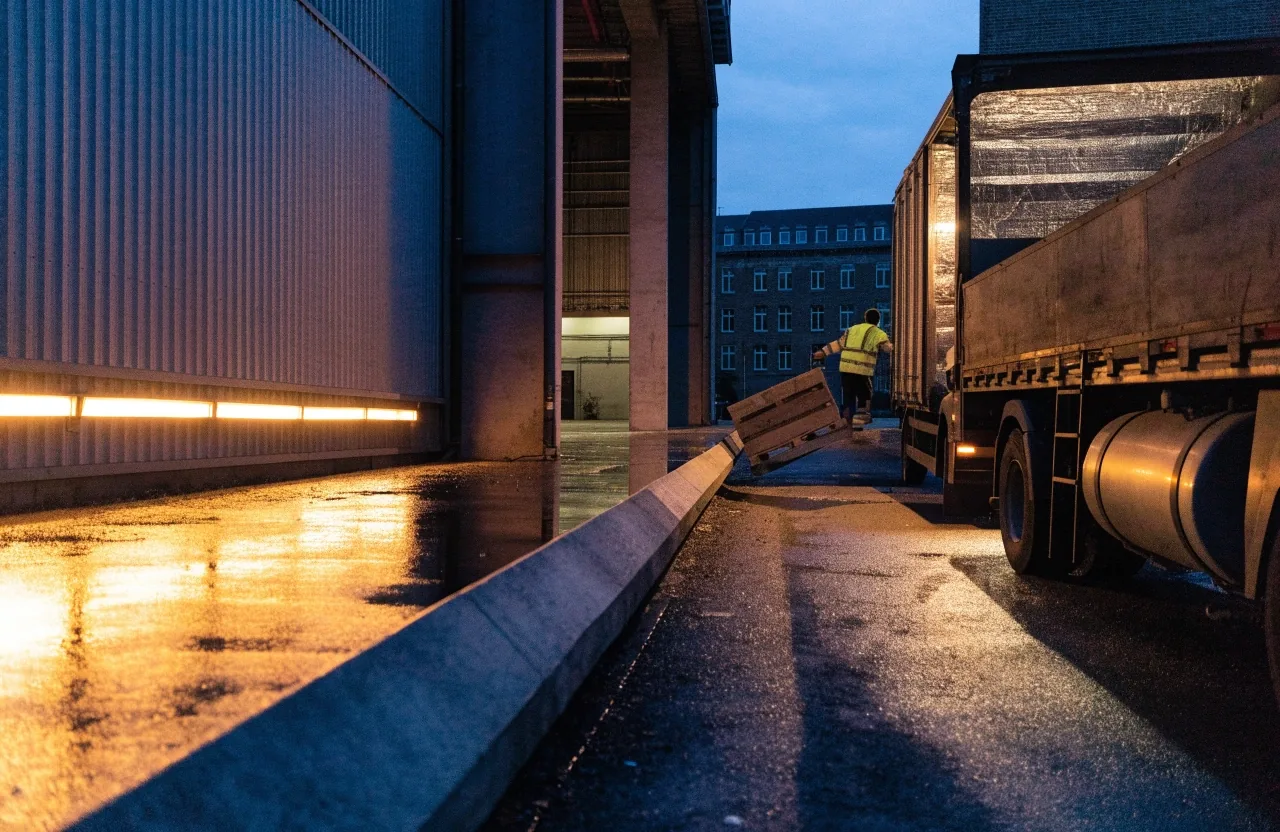
Small Belgian logistics office and loading bay at dusk with warm light spilling onto wet cobblestones

Atlantic Star Logistics

Raveschoot 22, 9080 Lochristi, Belgium

Mon–Fri · 09:00–18:00

+32 759716102

[email protected]

Common questions

Questions about working with us

Do you handle both small parcels and full containers?

Yes. A shipment can be a few cartons moving as groupage alongside other cargo, or a full container loaded at one supplier. The planning conversation is different in each case, but both start from the same questions about goods, destination, and deadline.

What do you need from me to prepare a quote?

A description of the goods, the collection address, the delivery address, the total weight and volume, and the date you need it to arrive. A commercial invoice or packing list helps, but it is not required for a first indication — we can tell you what documents will be needed before the booking is confirmed.

Can you clear customs on our behalf?

We prepare and file customs declarations and transit documents as part of the shipment, working with licensed brokers where the procedure requires it. We will tell you in advance which documents you have to supply yourself, such as certificates or licences that only the importer or exporter can obtain.

We have never imported before. Where do we start?

Send the supplier's invoice and tell us where the goods should end up. We will explain the terms on it, confirm the HS code that applies, and describe what happens at each stage — booking, export, transit, import clearance, and delivery. It is usually one short call plus a written summary you can keep.

How do we pay for a shipment?

Invoicing is by bank transfer against the agreed quotation, with the payment terms confirmed in writing before the booking is made. For customers collecting in person at the Lochristi office, card payment can be arranged on site. We do not ask for card details over the phone or by email.

What happens if a shipment is delayed?

You get a call with the reason and the options, not a status update with no next step. Where the delay is a missed vessel or a rolled flight, we look at the alternatives and their consequences — a different routing, a part delivery, or storage until the original plan can resume — and we tell you what each one costs before you choose.